Source of the article:Company Trends 发布时间:2026/10/29
In October, the Sixth Branch of China National Chemical Engineering Sixth Construction Co., Ltd. (CC6) successfully completed the hoisting of critical equipment in both the grinding and flotation plants of the KFM Project in the Democratic Republic of the Congo (DRC). This marks a major milestone in project construction, with the project officially entering the stage of precision equipment installation and piping works.
In the grinding plant, the construction team successfully completed the hoisting of major equipment, including the semi-autogenous (SAG) mill, ball mill shells, trunnions, and end covers. The grinding equipment represents the largest of its kind in the DRC and the first locally to feature a dual-motor drive system. The SAG mill end covers weigh approximately 200 tonnes in total, the trunnions approximately 68 tonnes, and the shell approximately 150 tonnes. For the ball mill, the end covers weigh approximately 120 tonnes, the trunnions approximately 70 tonnes, and the shell approximately 210 tonnes. Given the stringent hoisting precision requirements and the complexity of construction planning and coordination, the CC6 project team strictly implemented technical briefings, safety inspections, and equipment acceptance procedures. All critical operations, including lifting, positioning, and connection, were closely monitored throughout the process, ensuring that all heavy components were successfully installed in position.
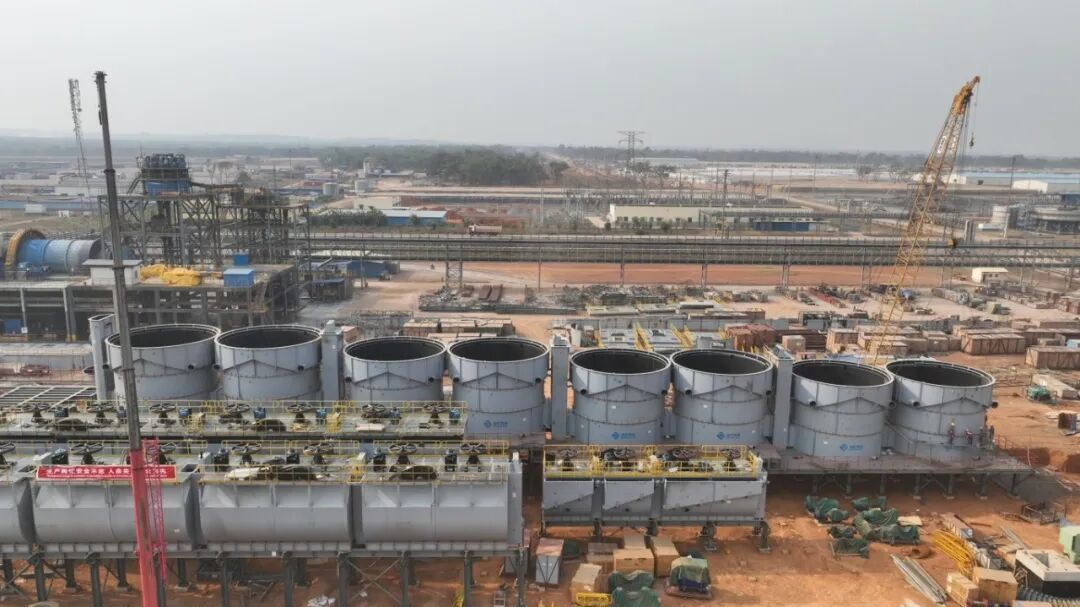
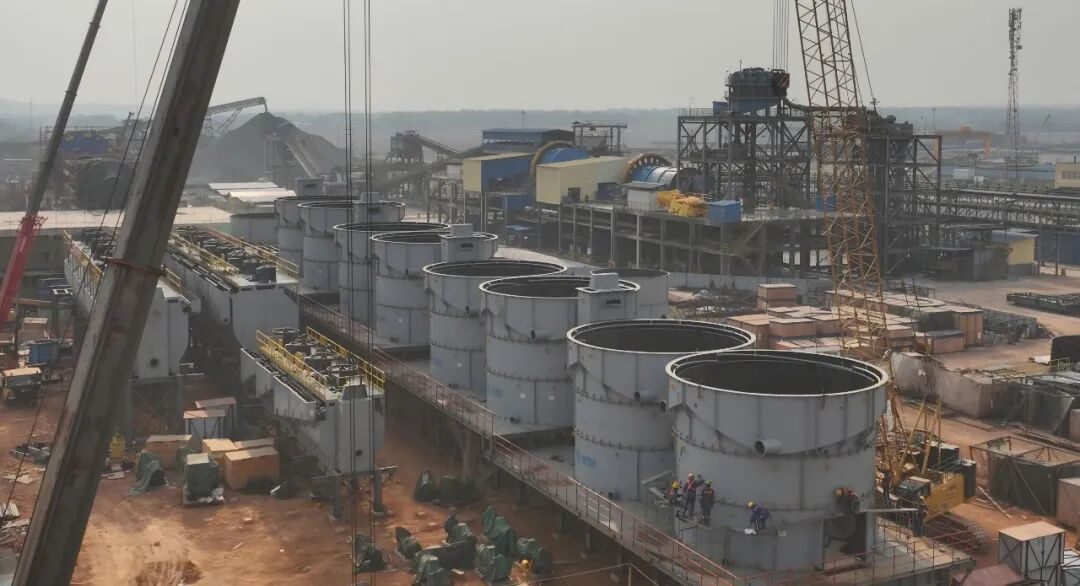
Meanwhile, all flotation machine hoisting operations in the flotation plant were also successfully completed. The work involved eight 320 m³ flotation machines, with a combined weight of approximately 390 tonnes; fifteen 70 m³ flotation machines, weighing approximately 290 tonnes in total; and four 30 m³ flotation machines, with a combined weight of approximately 60 tonnes. Each flotation machine shell was assembled from four sections into an overall three-tier structure. The equipment presented significant challenges due to its large dimensions, heavy individual components, stringent installation tolerances, and restricted working space on site. The CC6 project team conducted preliminary site inspections, optimized construction methods and emergency response plans, strengthened safety and technical briefings, and carried out thorough inspections of lifting equipment and tools. As a result, all flotation machines were positioned with zero deviation from the specified installation positions.
The project is located in the KFM mining area in Kisanfu, near Kolwezi, Lualaba Province, DRC. The scope of work mainly covers Phase II facilities and infrastructure, including primary crushing, the intermediate ore stockpile, grinding, pebble crushing, flotation, reagent preparation, concentrate thickening, tailings thickening, counter-current decantation (CCD), auxiliary electrical distribution rooms, roads, and other supporting facilities. Upon completion and commissioning, the project is expected to further enhance KFM’s operational and economic performance. It will also play a strategic role in the global energy transition, the supply of critical minerals, and the advancement of green, low-carbon, and sustainable development.
Going forward, the CC6 project team will continue to uphold the highest standards of safety and quality while working toward key construction milestones. The team will steadily advance critical operations, including the precision installation of equipment drive systems, and proceed with subsequent work such as the assembly of flotation machine agitator shafts. Through these efforts, the team will further strengthen construction quality and lay a solid foundation for the project's timely completion, commissioning, and efficient ramp-up to full production.